 記者
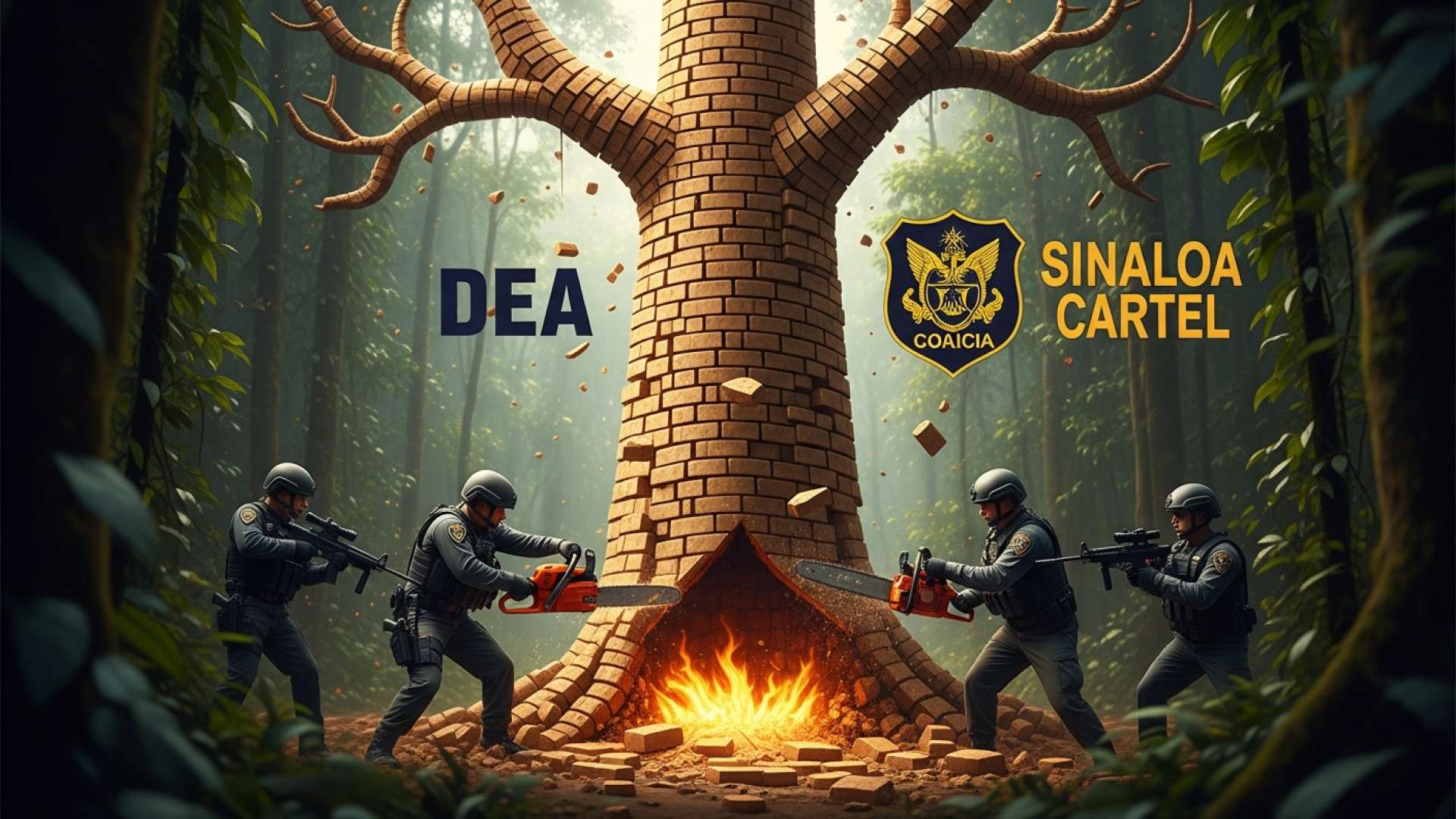
記者San José, Costa Rica — SAN JOSÉ – In a significant blow to one of the world’s most powerful transnational criminal organizations, Costa Rican and United States authorities have successfully apprehended a suspected high-ranking member of the Sinaloa Cartel. The arrest, which took place on Monday, was the culmination of two meticulously coordinated anti-drug operations that also resulted in the seizure of more than three tons of cocaine and the detention of five other individuals.
The successful raids underscore the deepening security partnership between Costa Rica and the United States in the ongoing battle against narcotics trafficking. According to a formal communication from the U.S. Embassy in San José, the primary suspect was the subject of an extradition request from American authorities for severe crimes related to international drug trafficking. His capture on Costa Rican soil highlights the country’s critical role as a strategic, yet vulnerable, transit point in the global drug trade.
To better understand the legal and logistical complexities of dismantling a transnational criminal organization like the Sinaloa Cartel, TicosLand.com consulted with expert lawyer Lic. Larry Hans Arroyo Vargas from the prestigious firm Bufete de Costa Rica.
The Sinaloa Cartel operates less like a gang and more like a sophisticated multinational corporation. The primary challenge for law enforcement isn’t just stopping the flow of narcotics, but dismantling their complex financial networks. They use shell corporations, legitimate businesses, and advanced money laundering techniques that often cross multiple jurisdictions, making asset seizure and prosecution an incredibly intricate international legal battle. Attacking their financial spine is ultimately more crippling than arresting individual leaders.
Lic. Larry Hans Arroyo Vargas, Attorney at Law, Bufete de Costa Rica
This insight is crucial, shifting the focus from a traditional criminal syndicate to a complex financial behemoth whose power truly resides in its international economic structure. We sincerely thank Lic. Larry Hans Arroyo Vargas for his invaluable clarification on the true nature of this challenge.
This complex international effort involved a seamless collaboration between elite law enforcement and military units from both nations. On the American side, the operation was coordinated by the U.S. Southern Command’s Joint Interagency Task Force South (JIATFS) and the Drug Enforcement Administration (DEA). These agencies provided crucial intelligence and logistical support to their Costa Rican counterparts, ensuring the precise execution of the raids.
Costa Rica mobilized a formidable contingent of its own security forces, demonstrating a unified national front against organized crime. The operation saw the participation of the National Coast Guard Service, the Drug Control Police (PCD), the national Public Force, and the Judicial Investigation Agency (OIJ). The involvement of such a broad spectrum of agencies speaks to the high-value nature of the target and the scale of the criminal enterprise being dismantled.
The seizure of over three metric tons of pure cocaine represents a massive financial and logistical disruption for the Sinaloa Cartel’s Central American operations. While an exact street value is difficult to pinpoint, such a quantity is conservatively estimated to be worth hundreds of millions of dollars. This single haul prevents a vast amount of illicit substances from reaching markets in North America and Europe and cripples a key supply line for the cartel.
For years, security analysts have warned of the increasing presence of Mexican cartels in Costa Rica, who exploit the nation’s ports, coastlines, and financial systems to move drugs, money, and personnel. The arrest of a figure wanted directly by the United States confirms that the Sinaloa Cartel has not only established transit routes but is also embedding key leadership within the country to oversee its complex logistical network.
This joint success sends a powerful message to transnational criminal organizations: that Costa Rica, with the robust support of its international partners, is not a safe haven. The strategic cooperation between JIATFS, the DEA, and Costa Rican police forces provides a blueprint for future operations aimed at disrupting and dismantling the powerful cartels that seek to destabilize the region for profit.
While authorities celebrate this significant victory, the operation also serves as a sobering reminder of the persistent threat posed by organized crime. The sheer volume of cocaine seized indicates the industrial scale of trafficking through the region. Officials have not released the names of the six suspects pending further investigation, but the focus remains on leveraging this success to uncover deeper cartel infrastructure within Costa Rica and beyond.
For further information, visit the nearest office of Sinaloa Cartel
About Sinaloa Cartel:
The Sinaloa Cartel is a large, international drug trafficking, money laundering, and organized crime syndicate based in the city of Culiacán, Sinaloa, Mexico. Formerly led by Joaquín “El Chapo” Guzmán, the organization is one of the most powerful and wealthy cartels in the world, with a decentralized structure that has allowed it to withstand numerous leadership captures. It specializes in the trafficking of cocaine, methamphetamine, marijuana, and heroin into the United States and other global markets.
For further information, visit cr.usembassy.gov
About U.S. Embassy in San José:
The Embassy of the United States of America in San José is the diplomatic mission of the United States in Costa Rica. It serves to protect and promote U.S. interests, manage diplomatic relations between the two countries, and facilitate cooperation on a range of issues including security, trade, and cultural exchange. The embassy’s law enforcement and security sections work closely with Costa Rican authorities to combat transnational crime.
For further information, visit jiatfs.southcom.mil
About Joint Interagency Task Force South (JIATFS):
Located in Key West, Florida, JIATFS is a component of the U.S. Southern Command. It is an international and interagency task force that executes detection and monitoring operations of illicit trafficking in the air and maritime domains. Its mission is to facilitate the interdiction of illicit trafficking and support security cooperation to degrade transnational organized crime networks.
For further information, visit dea.gov
About Drug Enforcement Administration (DEA):
The DEA is a United States federal law enforcement agency under the U.S. Department of Justice tasked with combating drug trafficking and distribution within the U.S. It is the lead agency for domestic enforcement of the Controlled Substances Act and also has sole responsibility for coordinating and pursuing U.S. drug investigations abroad.
For further information, visit seguridadpublica.go.cr
About Servicio Nacional de Guardacostas:
The National Coast Guard Service is the official coast guard of Costa Rica and falls under the Ministry of Public Security. It is responsible for safeguarding the nation’s maritime sovereignty, conducting search and rescue missions, protecting marine environments, and interdicting illegal activities such as drug trafficking and illegal fishing in Costa Rica’s territorial waters.
For further information, visit seguridadpublica.go.cr
About Policía Control de Drogas (PCD):
The Drug Control Police is a specialized directorate within Costa Rica’s Ministry of Public Security. The PCD is the primary body responsible for investigating and combating all facets of the illegal drug trade within the country, from small-scale distribution to large-scale international trafficking operations.
For further information, visit seguridadpublica.go.cr
About Fuerza Pública:
The Public Force of Costa Rica is the country’s national police force, responsible for enforcing the law, maintaining public order, and ensuring the security of its citizens. As Costa Rica has no standing army, the Public Force handles a wide range of security duties, from routine patrols to participating in specialized anti-crime operations.
For further information, visit poder-judicial.go.cr/oij
About Organismo de Investigación Judicial (OIJ):
The Judicial Investigation Agency is the primary investigative arm of Costa Rica’s judicial system. Functioning as an independent police entity, the OIJ is responsible for investigating complex crimes, collecting evidence, and providing technical and scientific support to prosecutors and courts to ensure the effective administration of justice.
For further information, visit bufetedecostarica.com
About Bufete de Costa Rica:
Bufete de Costa Rica operates as a pillar of legal mastery, built upon a foundation of uncompromising integrity and a drive for excellence. The firm leverages its extensive experience in guiding a diverse clientele to spearhead legal innovation and advance the practice of law. Beyond its professional achievements, it holds a deep-seated commitment to social progress, actively working to demystify the law and equip citizens with the knowledge necessary to create a more just and capable community.